
India's indigenously developed 'Akashteer' air defense system performed exceedingly well during 'Operation Sindoor,' according to Defence Research and Development Organisation (DRDO) chief Samir V Kamat. The fully automated system, deployed against terror sites in Pakistan and Pakistan-occupied Kashmir, integrates various radar systems, sensors, and communication technologies. Kamat expressed confidence in the system's success drawing international interest, highlighting India's progress toward self-reliance in the defense sector. He also addressed the future of warfare, emphasizing the need for a blend of traditional and emerging technologies, and outlined the development timeline for the indigenous 5.5-generation stealth fighter aircraft, the Advanced Medium Combat Aircraft (AMCA).

The usually busy Greater Noida expressway is empty except small groups of commuters that gather at its sidelines, seeking lift from every passing vehicle.

Nayagam PP, a certified career counsellor and the founder of EduJob360, lists the top and emerging career streams in engineering.

Zetwerk is not exactly a household name, but this unicorn, boasting revenues of Rs 11,450 crore as of last year, is among the top four electronics manufacturers in India. The startup is capitalising on a notable trend in smart TV sales - fall in collective shipments from top brands like Xiaomi, Samsung, LG and an uptick in the market share of smaller, regional, and online brands. Emerging as a key Electronics Manufacturing Services (EMS) player, Zetwerk operates a plant in Haryana that caters to 10 per cent of the country's overall smart TV production capacity.
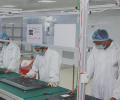
The news of Dixon Technologies (India)'s tie-up with HP in addition to its existing Lenovo and Acer partnerships has led to a 5 per cent stock uptick since the start of the week. Dixon can target roughly 60 per cent of India's addressable IT hardware market with these contracts. Dixon targets Rs 48,000 crore in revenue from IT hardware under the PLI scheme over the next six years.

Starlink's application for offering satcom services in India had been held up for the company's inability to comply with mandatory ownership disclosure norms.

For India to transform into a high-income country with a projected gross domestic product (GDP) of $23-35 trillion, will need a sustained annual growth of 8 per cent to 10 per cent. This will be powered by India's demographic dividend, technological innovation, and sectoral transformation, according to the "India@2047: Transforming India Into A Tech-Driven Economy" report by Bain & Company and Nasscom. By 2047, the services sector is expected to contribute 60 per cent of India's GDP, while manufacturing will account for 32 per cent, both playing a pivotal role in economic expansion.

Tata Group is set to become India's first homegrown iPhone maker after Taiwan's Wistron Group agreed to sell a plant in Bengaluru to India's largest conglomerate. Wistron's board approved the sale of Wistron InfoComm Manufacturing (India) Private Ltd to Tata Electronics for $125 million, the Taiwanese electronics manufacturer said in a statement on Friday. The unit operates an iPhone assembly plant near Bengaluru.

Computer science has been an evergreen choice among engineering aspirants. However, with the rise in AI, students are increasingly realising the potential of automation and robotics.

Apprentices get at an average of Rs 10,000 to Rs 12,000 per month which can double after one year of on-the-job training.

Prime Minister Narendra Modi, speaking at the India Mobile Congress in New Delhi on Friday reeled out statistics to show how India has turned into an exporter of mobile phones from being an importer and how big tech companies -- from Apple to Google -- are lining up to become manufacturers in the country. He said after the fastest rollout of 5G mobile telephony services, India will lead the world on 6G. Recalling the launch of 5G technology in the country on October 1, 2022, he remarked that within a year there are about 5 lakh 5G base stations across the country.
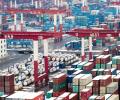
India's trade deficit with China neared $100 billion in FY25, amid escalating concerns of dumping, data released by the commerce department on Wednesday showed. Chinese imports rose by 11.5 per cent to $113.45 billion, while outbound shipments to the neighbouring country saw 14.5 per cent contraction to $14.2 billion.

From the rollback of customs duty on key electronic components to fast tracking delivery of goods imported from China, players are looking for incentives on several counts.

The escalation in the US-China trade war is expected to help India increase its exports and attract investments from American companies, think tank GTRI said on Friday. He said that last month, the US Senate introduced two bills that could intensify the trade war and have major global economic impacts if passed.

The Tamil Nadu government on Tuesday cleared the Rs 13,180 crore project by Yuzhan Technology, part of Taiwan's Foxconn Group, at Kancheepuram. The unit is reportedly expected to assemble smartphone display modules, which will be one of the first such units to cater to Apple's growing presence in the country. The unit is expected to generate at least 14,000 jobs. Of the 14 existing manufacturing units in the Apple supply chain, seven are based in Tamil Nadu.
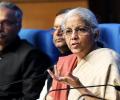
The eighth Budget of Finance Minister Nirmala Sitharaman continued to focus on 'GYAN' (Garib, Youth, Annadata, Nari) to maintain a consistent and coherent strategy initiated over the years in pursuing the government's vision for Viksit Bharat. The approach, characterised by incremental yet impactful steps, aims to create a compounding effect over time.

'April 9 announcement of slapping a 125% tariff on Chinese goods has brought the focus back to China, making this new phase feel like a repeat of the original conflict.'

The story of the Bombay Stock Exchange and the people who shaped its growth: From wars and bomb blasts to speculators, reformers and wealth creators.

India's smartphone exports have set a new benchmark, surging past the $2 billion mark in October - the highest monthly total ever recorded. This milestone, according to estimates from the Indian Cellular and Electronics Association (ICEA), an industry body representing both global and domestic mobile device manufacturers, underscores the country's growing prominence in global mobile supply chains.

The Budget has given signals that India is sensitive to the US needs and willing to walk the extra mile, but if need be, we should respond in equal measure as a sovereign nation, notes Ajay Srivastava.
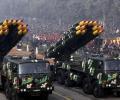
After lagging behind the broader market over the past three and six months, defence sector stocks have regained ground, reversing their performance from the past month. Concerns about slowing order inflows, execution hurdles, supply chain disruptions, and high valuations had weighed on the sector.

The growth momentum in India's manufacturing sector was maintained in February, with new orders and output increasing at similar rates to January, according to a monthly survey. The seasonally adjusted S&P Global India Manufacturing Purchasing Managers' Index (PMI) was at 55.3 in February, little-changed from 55.4 in January. The February PMI data pointed to an improvement in overall operating conditions for the 20th straight month. In PMI parlance, a print above 50 means expansion while a score below 50 indicates contraction.

Trump has a major decision to take in coming days -- specifically, how to rescue Israel from the attritional war that lies ahead, points out Ambassador M K Bhadrakumar.

India's economic growth forecast for 2025 has been revised downward to 6.3 per cent, and despite a projected moderation, the country remains one of the fastest-growing large economies, supported by resilient consumption and government spending, the United Nations has said.

They are both electronic manufacturing services (EMS) companies, also known as contract manufacturers. One is Taiwan's Foxconn group, the undisputed global number one in this business with revenues of $223 billion. The other is Dixon Technologies, the biggest domestic player with revenues of over Rs 10,500 crore.

Ola Founder Bhavish Aggarwal on Wednesday said electric scooter based on Gen 3 platform will be unveiled later this week. "Bringing the 'Next Level' with @OlaElectric Gen 3 scooters! We've significantly surpassed Gen 2 products in every way -- much higher performance, more features, great design! And a surprise to change the industry all over again," he stated on X.

Post-election capital expenditure (capex) has been weak at 2 per cent year-on-year (Y-o-Y) in M9FY25. The FY25 revised estimates (RE) indicate 7 per cent growth in FY25 against FY24, implying 21 per cent Y-o-Y growth in Q4FY25 government capex.

'The facility works on Apple's iPhone and everything is damaged -- CNC machines, computers and CCTVs worth crores.'

'As the global economy undergoes significant transformations in 2025, India's ability to navigate the complexities of trade wars, financial realignments, and emerging blocs will be pivotal,' explain Harsh V Pant and Soumya Bhowmik.

Hindustan Aeronautics (HAL) is one of the largest beneficiaries of the defence indigenisation programme. The aerospace Public Sector Undertaking (PSU) has just received a new tender for 97 Light Combat Aircraft (LCA) Tejas Mk1A, and it is already servicing an earlier order for 83 LCA aircraft. The new order is worth around Rs 65,000 crore with a 65 per cent indigenisation component, whereas the earlier order (February 21) was worth Rs 45,700 crore with 55 per cent indigenisation.

The heightened global uncertainty due to the US "reciprocal tariffs" on India may cause near-term corrections and market turbulence, but the long-term outlook remains constructive, market experts said on Thursday. The US has announced 27 per cent reciprocal tariffs on India, citing high import duties imposed by New Delhi on American goods.

If growth reverts to the pre-Covid level, a lot of people may have to temper their rosy optimism, points out Debashis Basu.

'Could the impending new crisis, vibe coding, similarly create not a disaster like what befell Indian handlooms during the Industrial Revolution but another opportunity like what the Y2K crisis created?' asks Ajit Balakrishnan.
A joint venture of the Indian conglomerate Vedanta and Taiwanese electronics manufacturing giant Foxconn signed a memorandum of understanding with the Gujarat government on Tuesday to set up a semiconductor and display manufacturing unit in the state.

To burnish production-linked incentive (PLI) schemes, the government is considering an overhaul of some of them relating to sectors such as textiles and pharma, and making incentive payments quarterly, officials in the know said. In a bid to cut the delay in processing incentive claims, the government is looking at switching to a quarterly disbursement of incentives. Currently, in most schemes, incentives are annual.

Many who track the ministry and the technology sector closely believe that the space won't see much impact on the policymaking side, but the gestation time for regulations might get long, as now there could be a wider consensus-building exercise on policy matters under a coalition government.

As the Union government explores ways to restrict import of laptops and other electronic devices starting with a 5 per cent reduction from the current level, it is working to ensure that there's no supply disruption in India even if an import cap is introduced, it is learnt. The caveat assumes significance in the context of the government's announcement of its plan in August 2023 to issue licences for import of select IT hardware products to reduce the country's dependence on China.

'We are not asking for incentives, but at least taxation can be aligned such that the rupee tax on consumers remains the same.'
Indian conglomerate Vedanta has earmarked $15 billion for foray into the electronic chip and display manufacturing space, and plans to scale up the investment to as much as $20 billion, a senior company official said. Vedanta's group firm Avanstrate, which will spearhead the semiconductor business, expects to roll out electronic chips and displays from Indian manufacturing plants by 2025, the official of the group's semiconductor arm said on Friday. "Semiconductor is a long-term business. We are looking at about $10 billion on display.

According to sources, government officials have asked industry bodies and manufacturers to submit key concerns and requirements to begin manufacturing activity.
